
 By
By
When Ali Barwick first arrived at DeSales University in Pennsylvania, a career in lighting was not part of the plan. She enrolled with aspirations of becoming an actor, drawn to the school's hands-on approach and opportunities through the Pennsylvania Shakespeare Festival. Like many people who eventually find themselves behind a lighting console, she took a path into the profession almost by accident.
A friend working on a student-directed production needed help with the lights and asked Barwick to lend a hand. Armed with little more than curiosity, she learned to operate the theater’s ETC Expression console, figured out how to turn the lights on and off, and discovered a talent she had never thought of before. What started as a favor quickly turned into a passion. "I found out I was really good at it," Barwick recalls. "I was playing around with lighting and music for student productions, and it just clicked."
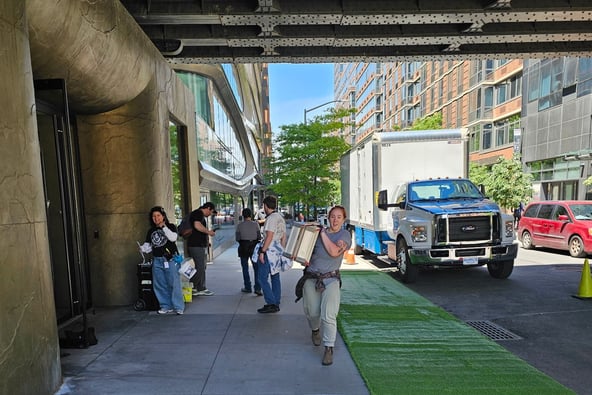
That discovery led her deeper into the world of theatrical lighting. During her early twenties, she began working on over hire calls at Lehigh University's Zoellner Arts Center, a venue that hosted both university performances and touring Broadway productions. There, the head electrician handed her a relatively new console at the time: an ETC Ion. "I just picked it up and loved doing it," she says.
The experience on an Ion opened doors throughout the region. Barwick programmed productions at theaters across Pennsylvania and New Jersey before eventually becoming Assistant Master Electrician and Programmer for the Opera Company of Philadelphia. Along the way, she worked on productions that took her to local stages from Amsterdam to Austin and everywhere in between.
Ali’s transition into film happened gradually. While working with the Opera Company of Philadelphia, Barwick began taking film jobs during gaps in her schedule. When she first started in film, the differences between that industry and the theater industry in which she’d grown up were significant. Film productions relied heavily on tungsten fixtures and workflows that didn't always require the same level of programming expertise common in live entertainment. Over time, however, that would begin to change.
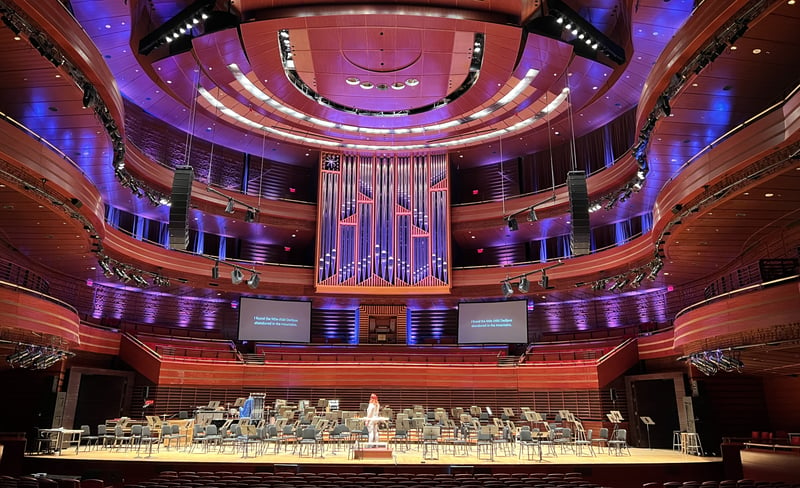
The shift really accelerated during the pandemic when many live entertainment professionals found opportunities in film and television. For Barwick, whose background included years of experience with moving lights, networking, and ETC consoles, the transition felt natural. "The film world had become much more interested in networking, wireless DMX, LED technology, and programming around that time," Barwick explains. "A lot of the knowledge people had from live events suddenly became very valuable."
During her time in film and TV, Ali has become a respected lighting programmer and board operator, working on countless projects including Creed, Creed II, HBO's acclaimed Mare of Easttown, Dope Thief, and, most recently, Law & Order. Yet despite the change in scenery, many of the skills she developed in theater continue to serve her every day.
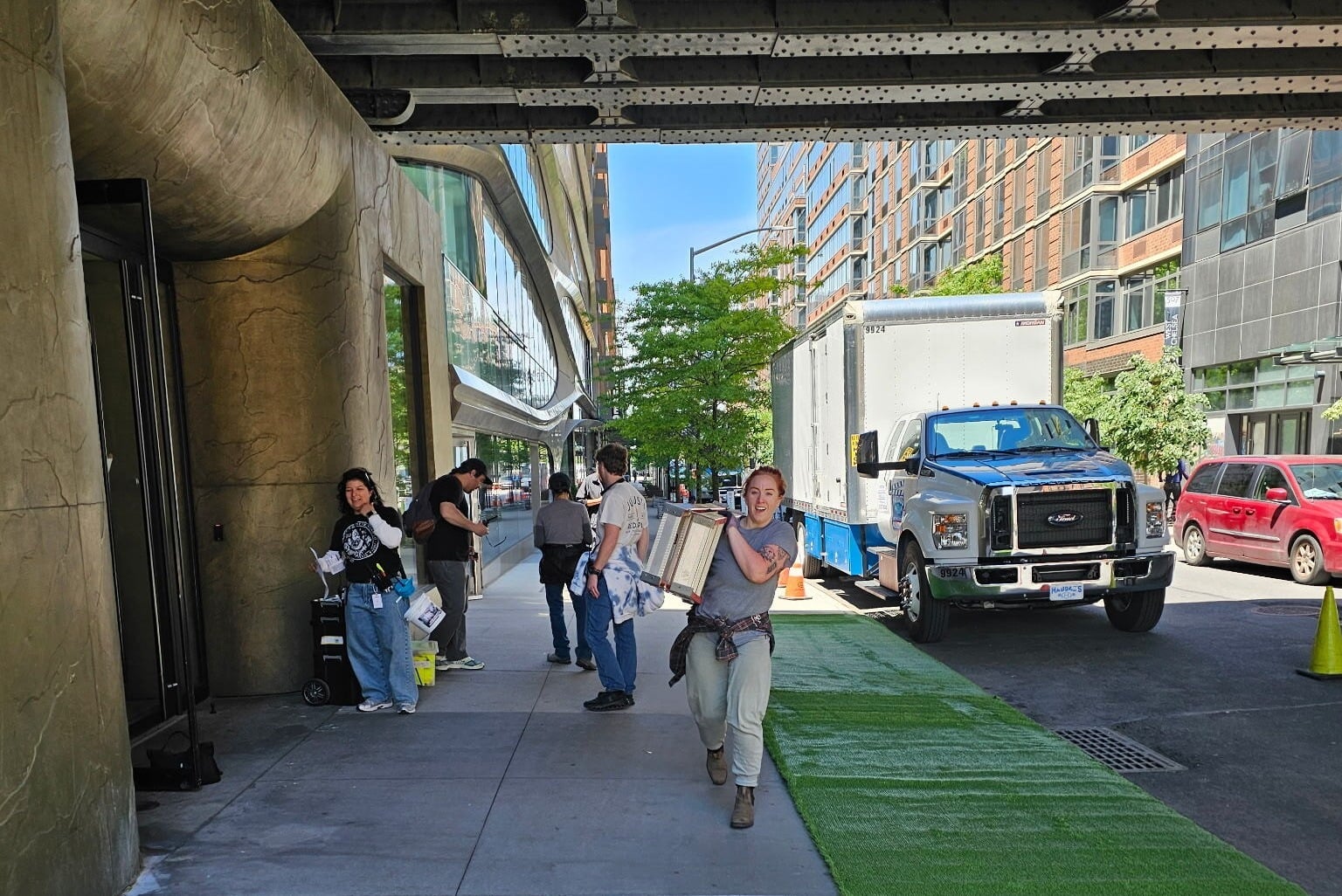
On Law & Order, Barwick serves as a rigging board operator, working closely with the production lighting team to prepare locations before filming begins. Her role involves programming fixtures, creating system layouts, building show files, and ensuring everything is ready for the shooting crew when production arrives.
It's a highly technical position that requires equal parts planning, problem-solving, and communication. But for Barwick, one of the most important lessons she carries from the theater isn't technical at all. After years in live entertainment, Ali swears by the philosophy that productions succeed when people work together, regardless of department.
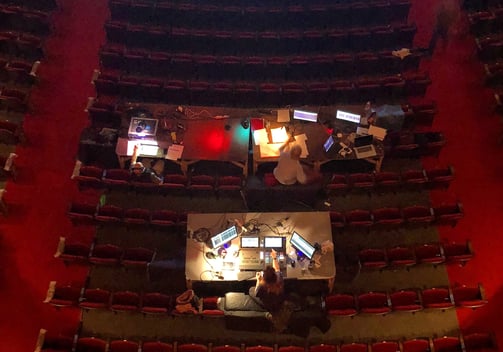 In the film industry, this can be a challenge with film crews often operating in highly specialized teams; in spite of this, Ali makes a deliberate effort to build relationships across the set. "I'll introduce myself to the art department, to set dressers, to grips," she says. "Theater always felt very collaborative, like everyone was putting on a production together. I've always tried to bring that mindset with me into film."
That collaborative approach extends beyond workflow. Colleagues know Barwick as someone who genuinely enjoys the process and solving problems. "I love challenges," she says. "Every project is a chance to learn something new and then take that knowledge to the next one."
That mindset is already proving valuable as she prepares for her next project, a comedy series that will introduce her to a new team, with new workflows, and new techniques like live plotting. Rather than viewing those unknowns as obstacles, she welcomes them as opportunities to grow.
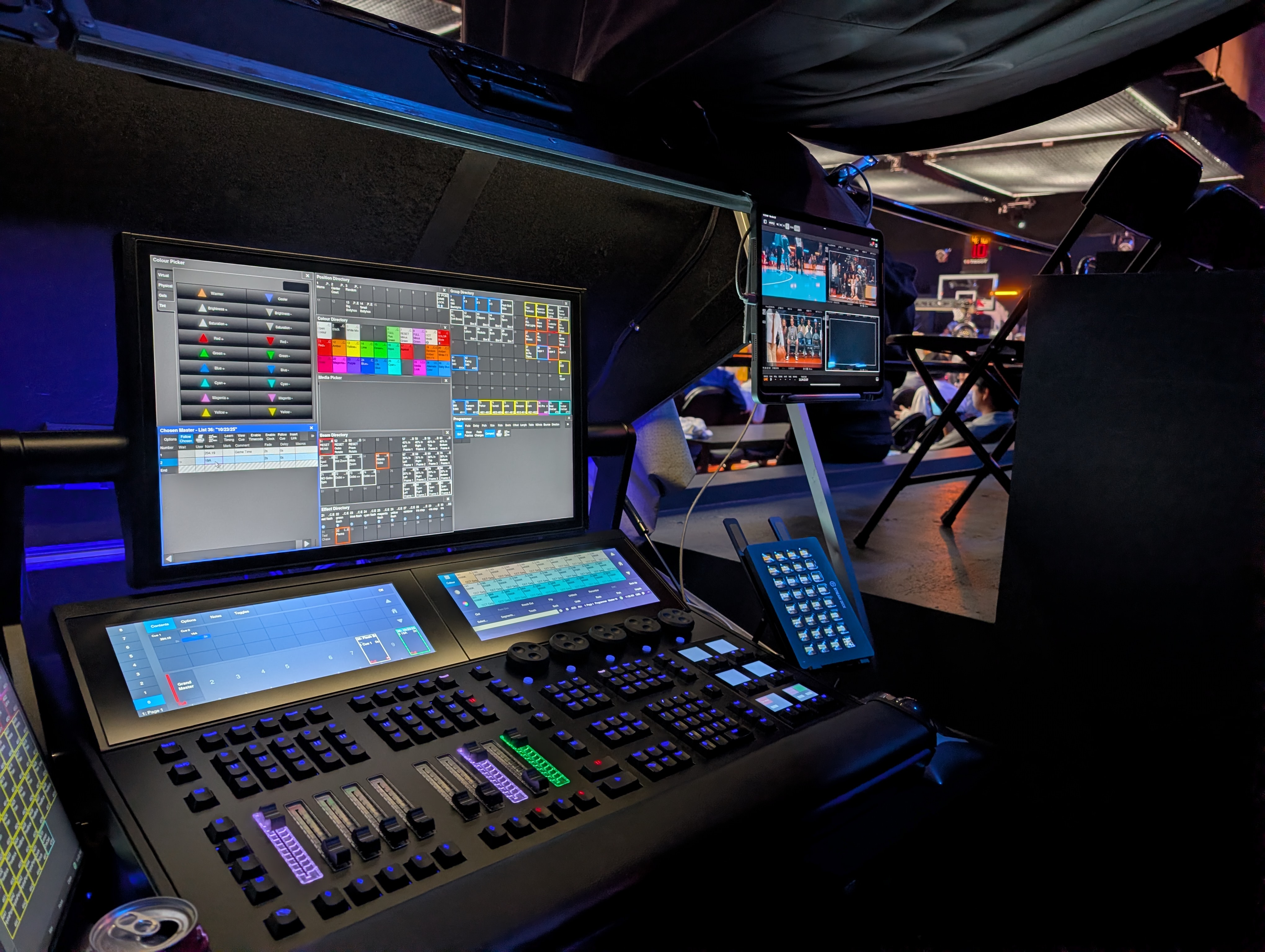
Throughout all those transitions—from theatre to opera, from opera to television, from one production to the next—one constant has remained: ETC. Barwick owns multiple ETC consoles, including two Ion XEs and a Gio @5, and while she has experience programming on a variety of platforms, she sticks to Eos whenever possible.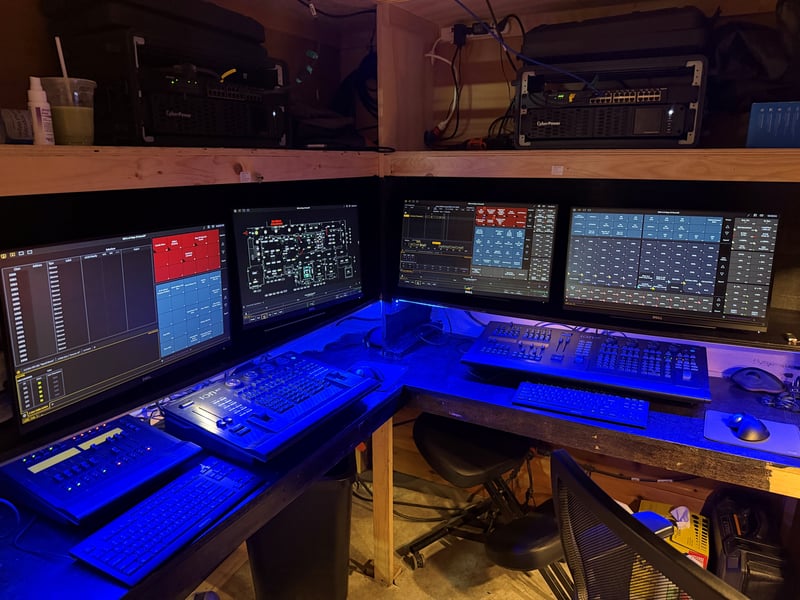
For her, the biggest strength of Eos is accessibility. "I think ETC is the easiest console for people to walk up to and use," she says. "Not everyone on a film set is a programmer. Sometimes you need someone who's testing lights or doing a walkthrough to be able to bring something up without a huge learning curve."
That ease of use becomes even more important on large productions where multiple departments may need access to the system. Barwick has seen firsthand how quickly electricians, technicians, and new programmers can become comfortable with Eos, allowing productions to move more efficiently and with fewer barriers between teams.
Additionally, for Ali, just as important as technology is the support behind it. After years of relying on ETC products across countless productions, Barwick remains a vocal supporter of the company's technical support team and user community. "Everybody talks about ETC technical support, and they're right," she says. "They're incredible."
As her career continues to evolve, Barwick remains focused on what drew her to lighting in the first place: learning, collaborating, and finding new challenges. Whether she's programming an opera, building a networked system for a television set, or exploring the latest Eos features, she's still driven by the same curiosity that led her to say "yes" when a friend asked for help all those years ago.